SHOTS.SO MACBOOK MOCKUP

Wabeyi: Ride-hailing & Carpooling Solutions
Wabeyi: Ride-hailing & Carpooling Solutions

Back 2 ‘work’
Project Role:
Lead UX Designer
Industry:
Ride-hailing
Duration:
12 Weeks
Year:
Sep 2025
Deliverables:
Passenger & Driver App

"Designing the ideal way for Drivers to earn passively, and for Passengers to commute easily"
"Designing the ideal way for Drivers to earn passively, and for Passengers to commute easily"
Project Role:
Product Designer
Pr. Product Designer
Industry:
Lawtech
Duration:
12 Weeks
Year:
Feb 2005
Feb 2025
Deliverables:
User & Admin Dashboard
The Product 🏆
The Product 🏆
The Product 🏆
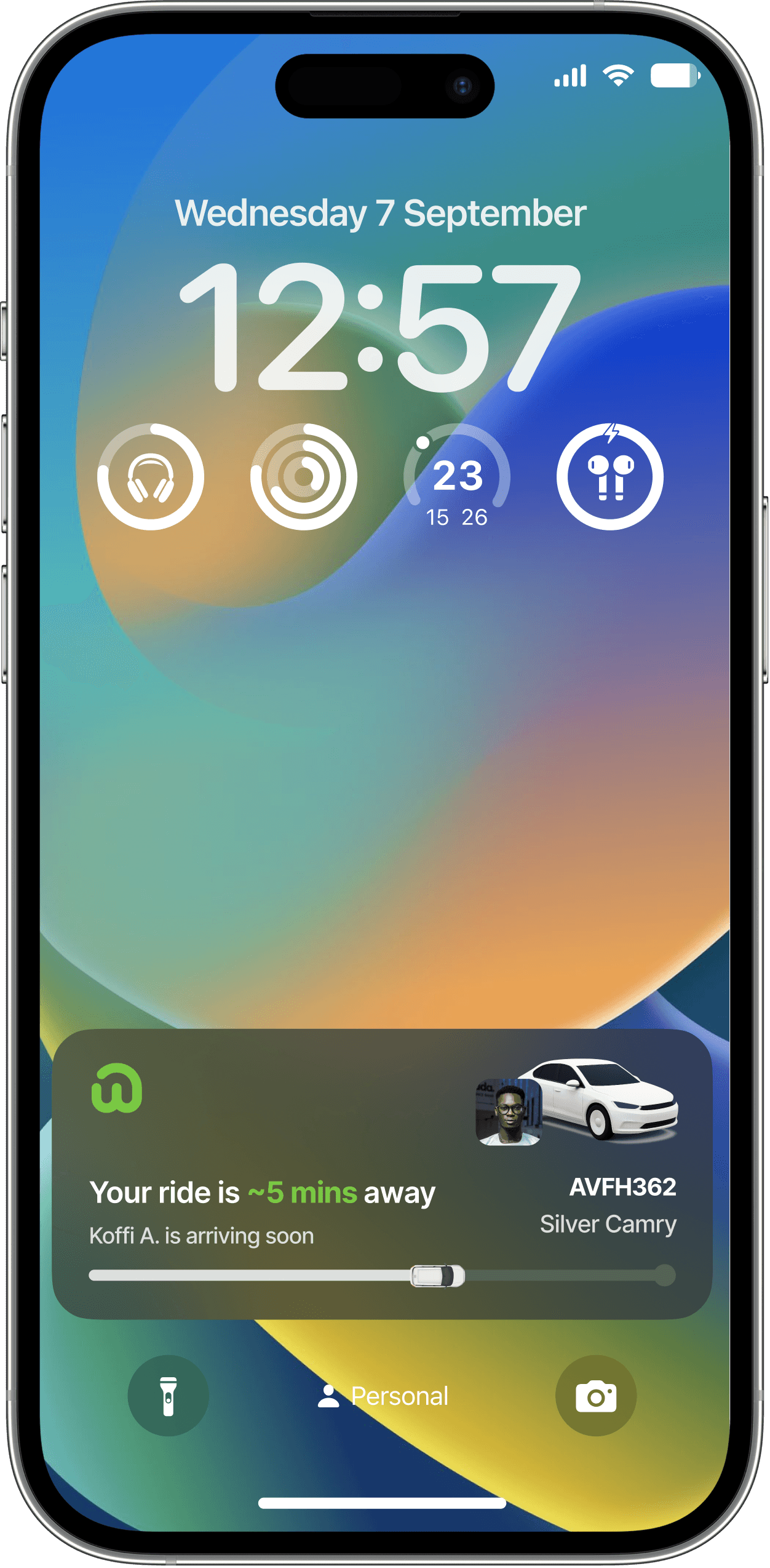
Wabeyi is a mobile application designed specifically for users in Côte d'Ivoire, aimed at revolutionizing urban mobility by connecting drivers with riders along shared routes. At its core, Wabeyi enables everyday drivers to monetize their daily commutes by picking up passengers, while providing riders with affordable, convenient transportation options. The app differentiates itself from traditional ride-hailing services by focusing on route-based matching, which minimizes detours and maximizes efficiency for drivers who are already en route to their destinations.
Wabeyi is a mobile application designed specifically for users in Côte d'Ivoire, aimed at revolutionizing urban mobility by connecting drivers with riders along shared routes. At its core, Wabeyi enables everyday drivers to monetize their daily commutes by picking up passengers, while providing riders with affordable, convenient transportation options. The app differentiates itself from traditional ride-hailing services by focusing on route-based matching, which minimizes detours and maximizes efficiency for drivers who are already en route to their destinations.
As the Lead Designer on this project, collaborating closely with a Senior Product Designer, I focused on creating an intuitive, culturally relevant experience that addresses the unique transportation needs of Ivorian users, such as high traffic congestion in cities like Abidjan and the prevalence of informal carpooling.
As the Lead Designer on this project, collaborating closely with a Senior Product Designer, I focused on creating an intuitive, culturally relevant experience that addresses the unique transportation needs of Ivorian users, such as high traffic congestion in cities like Abidjan and the prevalence of informal carpooling.
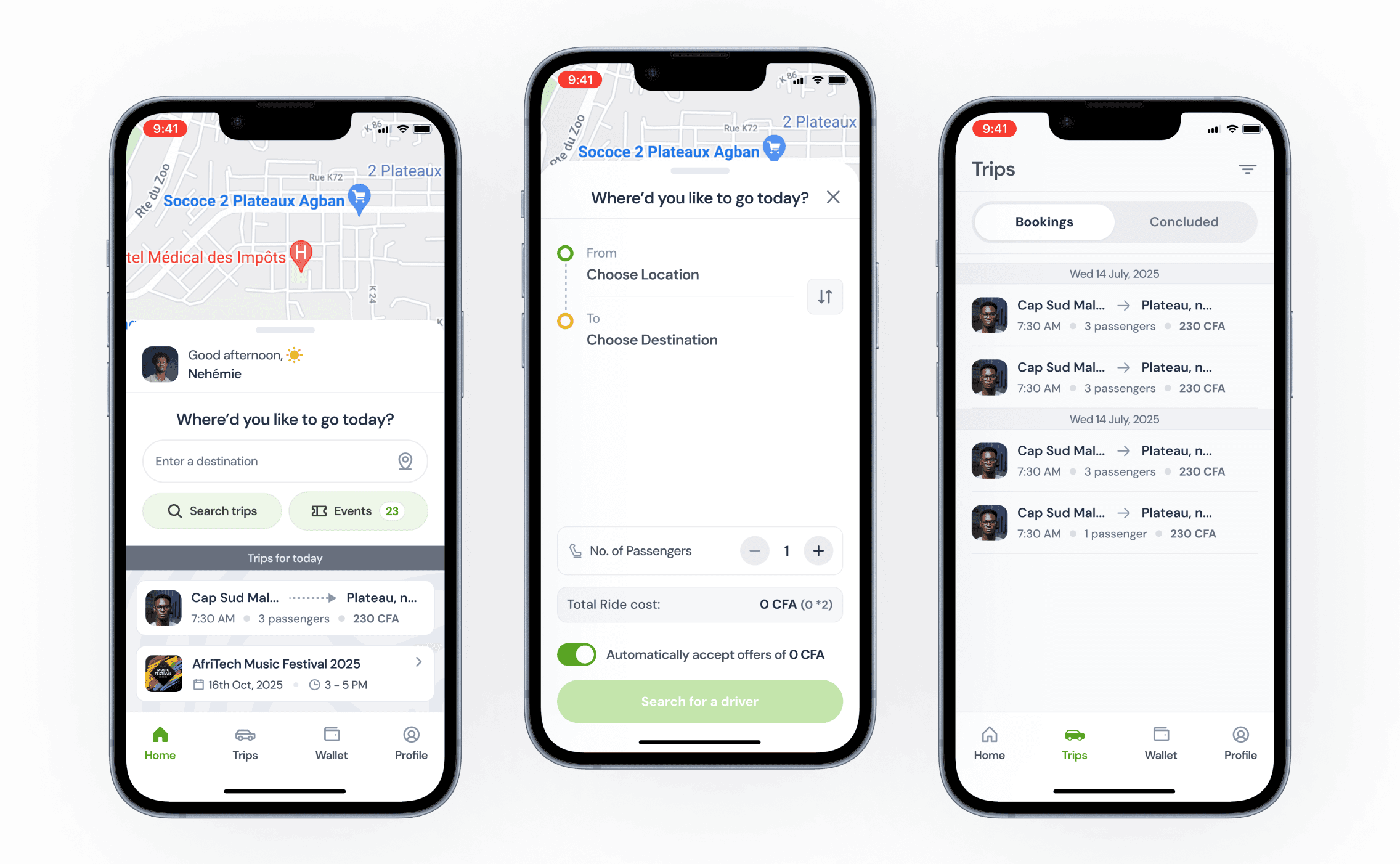
(Passenger app showing home screen, location selector and Trip history)
(Passenger app showing home screen, location selector and Trip history)
(Passenger app showing home screen, location selector and Trip history)
Passengers can access quick actions from the home screen, view upcoming and past trips, manage their in-app wallet for payments and rewards, and edit their profile settings. Drivers have similar sections, plus analytics for tracking performance and milestones. Built with emerging market realities in mind, Wabeyi incorporates features like multilingual support (primarily French, given the region), offline capabilities where possible, and integration with local mobile money services for frictionless transactions.
Passengers can access quick actions from the home screen, view upcoming and past trips, manage their in-app wallet for payments and rewards, and edit their profile settings. Drivers have similar sections, plus analytics for tracking performance and milestones. Built with emerging market realities in mind, Wabeyi incorporates features like multilingual support (primarily French, given the region), offline capabilities where possible, and integration with local mobile money services for frictionless transactions.
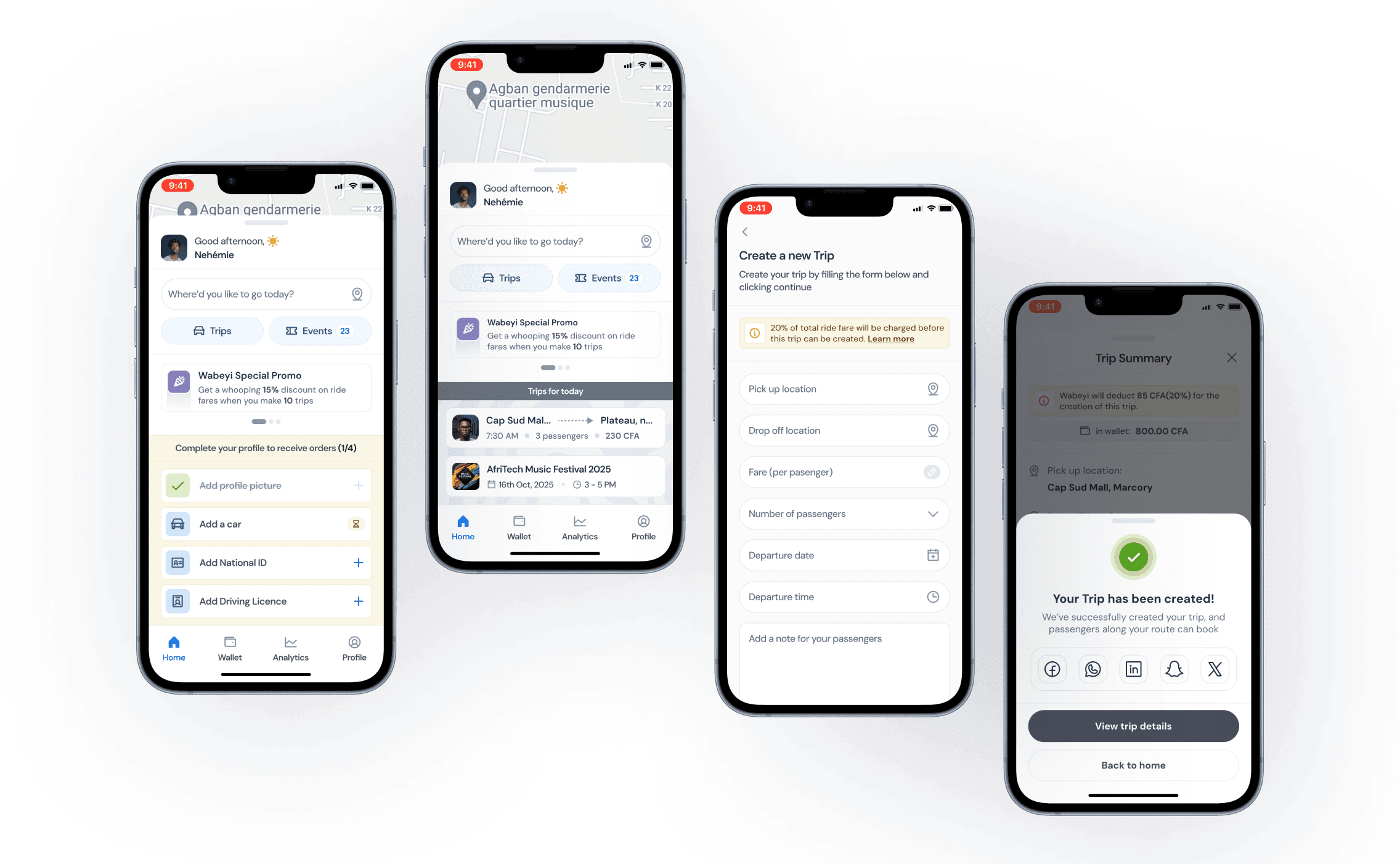
{L-R} (Driver app showing home with incomplete profile, home when profile is complete, create a new trip and success modal)
{L-R} (Driver app showing home with incomplete profile, home when profile is complete, create a new trip and success modal)
{L-R} (Driver app showing home with incomplete profile, home when profile is complete, create a new trip and success modal)
The platform operates through two tailored user experiences: one for passengers (with a primary green color scheme) and one for drivers (with a primary blue color scheme). It features three core functionalities—ride-hailing, carpooling, and events—integrated into a seamless interface.
The platform operates through two tailored user experiences: one for passengers (with a primary green color scheme) and one for drivers (with a primary blue color scheme). It features three core functionalities—ride-hailing, carpooling, and events—integrated into a seamless interface.
The platform operates through two tailored user experiences: one for passengers (with a primary green color scheme) and one for drivers (with a primary blue color scheme). It features three core functionalities—ride-hailing, carpooling, and events—integrated into a seamless interface.
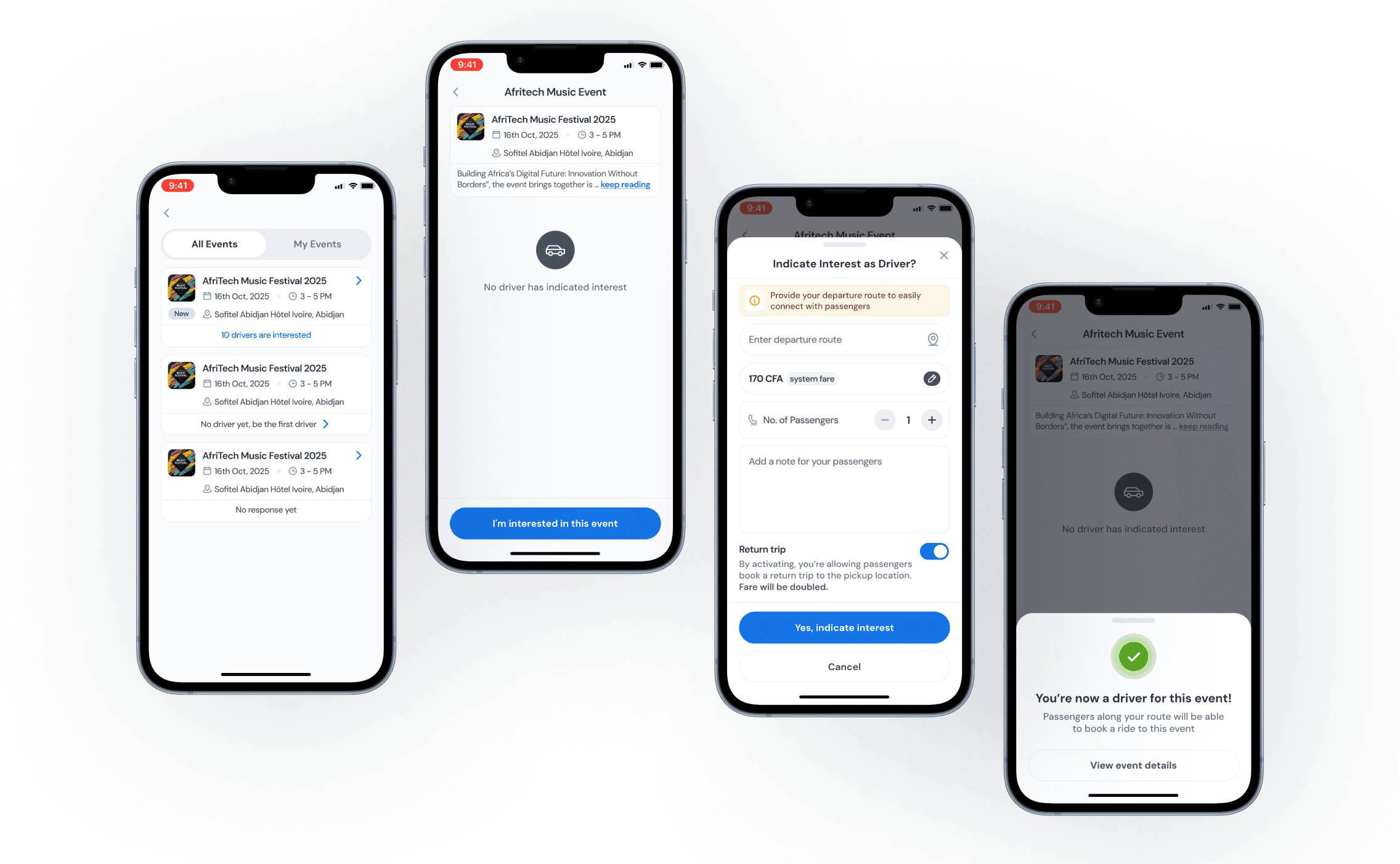
(Driver flow for events, highlighting the experience of indicating interest for listed events)
(Driver flow for events, highlighting the experience of indicating interest for listed events)
(Driver flow for events, highlighting the experience of indicating interest for listed events)
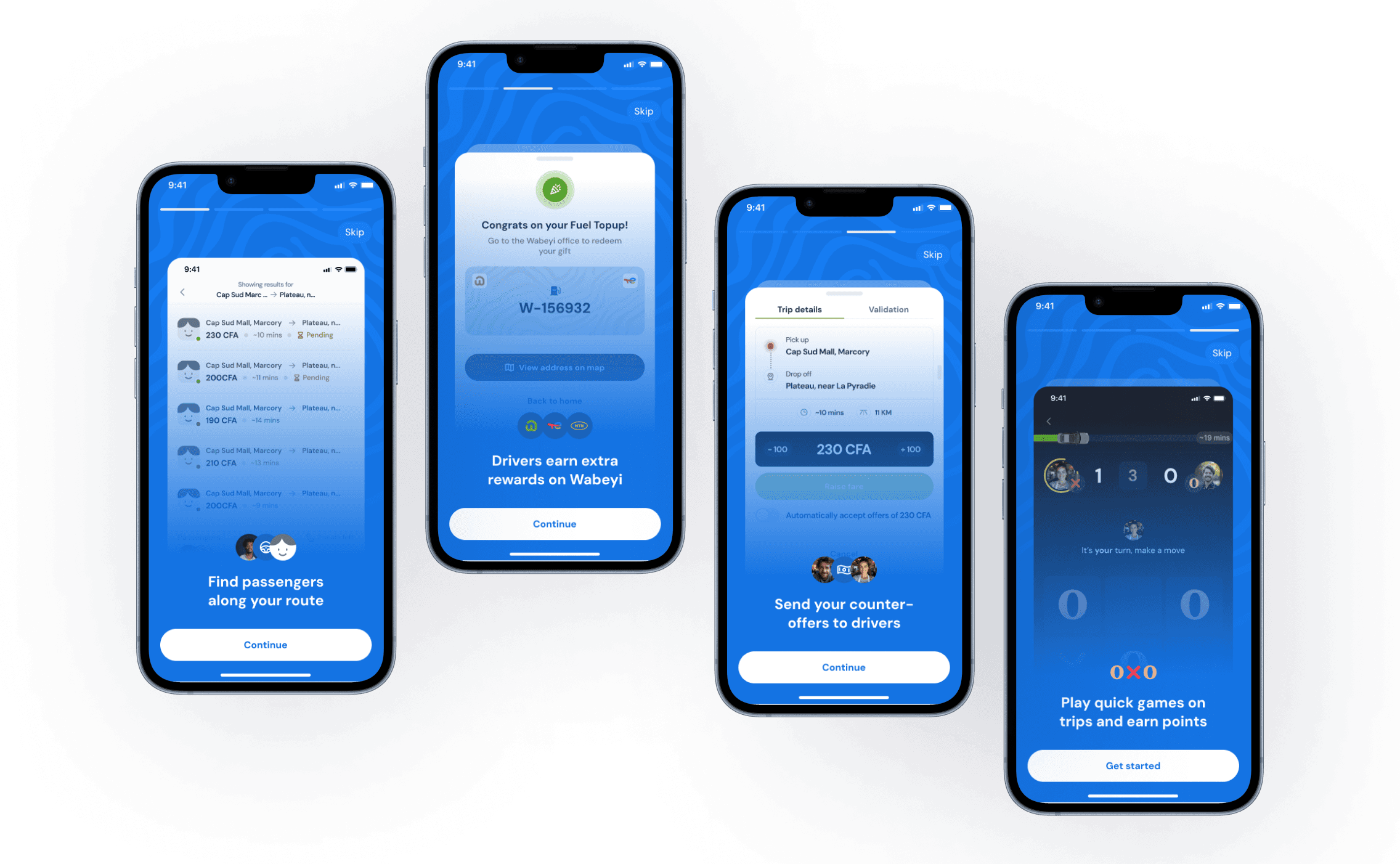
(Universal Onboarding, higlighting some of the KSP of the Wabeyi mobile app)
(Universal Onboarding, higlighting some of the KSP of the Wabeyi mobile app)
(Universal Onboarding, higlighting some of the KSP of the Wabeyi mobile app)
The Challenge 🧩
The Challenge 🧩
The Challenge 🧩
The Challenge In Côte d'Ivoire, urban transportation faces significant hurdles, including overcrowded public transit, unreliable taxi services, and rising fuel costs that burden both drivers and passengers. Many drivers commute daily with empty seats, missing opportunities to offset expenses, while riders struggle with high fares, long wait times, and safety concerns in informal ride-sharing arrangements. Traditional ride-hailing apps often fail in this context due to their focus on on-demand pickups, which lead to inefficient detours, higher emissions, and frustration for drivers who prioritize their own schedules.
The Challenge In Côte d'Ivoire, urban transportation faces significant hurdles, including overcrowded public transit, unreliable taxi services, and rising fuel costs that burden both drivers and passengers. Many drivers commute daily with empty seats, missing opportunities to offset expenses, while riders struggle with high fares, long wait times, and safety concerns in informal ride-sharing arrangements. Traditional ride-hailing apps often fail in this context due to their focus on on-demand pickups, which lead to inefficient detours, higher emissions, and frustration for drivers who prioritize their own schedules.
The Challenge In Côte d'Ivoire, urban transportation faces significant hurdles, including overcrowded public transit, unreliable taxi services, and rising fuel costs that burden both drivers and passengers. Many drivers commute daily with empty seats, missing opportunities to offset expenses, while riders struggle with high fares, long wait times, and safety concerns in informal ride-sharing arrangements. Traditional ride-hailing apps often fail in this context due to their focus on on-demand pickups, which lead to inefficient detours, higher emissions, and frustration for drivers who prioritize their own schedules.

Commuters face packed buses and inconsistent schedules, making daily travel stressful.

Drivers pay high fuel costs while commuting with empty seats, missing income opportunities.
Riders pay high prices and wait long times for taxis or informal rides.
Standard apps force drivers into long detours, wasting time, fuel, and increasing frustration.
User research and interviews revealed these recurring frustrations for commuters and drivers in Abidjan.
User research and interviews revealed these recurring frustrations for commuters and drivers in Abidjan.
User research and interviews revealed these recurring frustrations for commuters and drivers in Abidjan.
Additional challenges include low digital literacy in some user segments, limited internet access in rural areas, and regulatory hurdles around vehicle verification and payments.
Additional challenges include low digital literacy in some user segments, limited internet access in rural areas, and regulatory hurdles around vehicle verification and payments.
Additional challenges include low digital literacy in some user segments, limited internet access in rural areas, and regulatory hurdles around vehicle verification and payments.
Drivers need incentives to participate consistently, while passengers require trustworthy matching and flexible pricing. From a design perspective, balancing dual user flows (passenger vs. driver) while ensuring security through KYC levels and fostering engagement via rewards posed complex UX decisions. The project also had to navigate a competitive landscape dominated by global players(Uber, Lyft), but with a need for localization to Côte d'Ivoire's economic and cultural nuances.
Drivers need incentives to participate consistently, while passengers require trustworthy matching and flexible pricing. From a design perspective, balancing dual user flows (passenger vs. driver) while ensuring security through KYC levels and fostering engagement via rewards posed complex UX decisions. The project also had to navigate a competitive landscape dominated by global players(Uber, Lyft), but with a need for localization to Côte d'Ivoire's economic and cultural nuances.
Drivers need incentives to participate consistently, while passengers require trustworthy matching and flexible pricing. From a design perspective, balancing dual user flows (passenger vs. driver) while ensuring security through KYC levels and fostering engagement via rewards posed complex UX decisions. The project also had to navigate a competitive landscape dominated by global players(Uber, Lyft), but with a need for localization to Côte d'Ivoire's economic and cultural nuances.
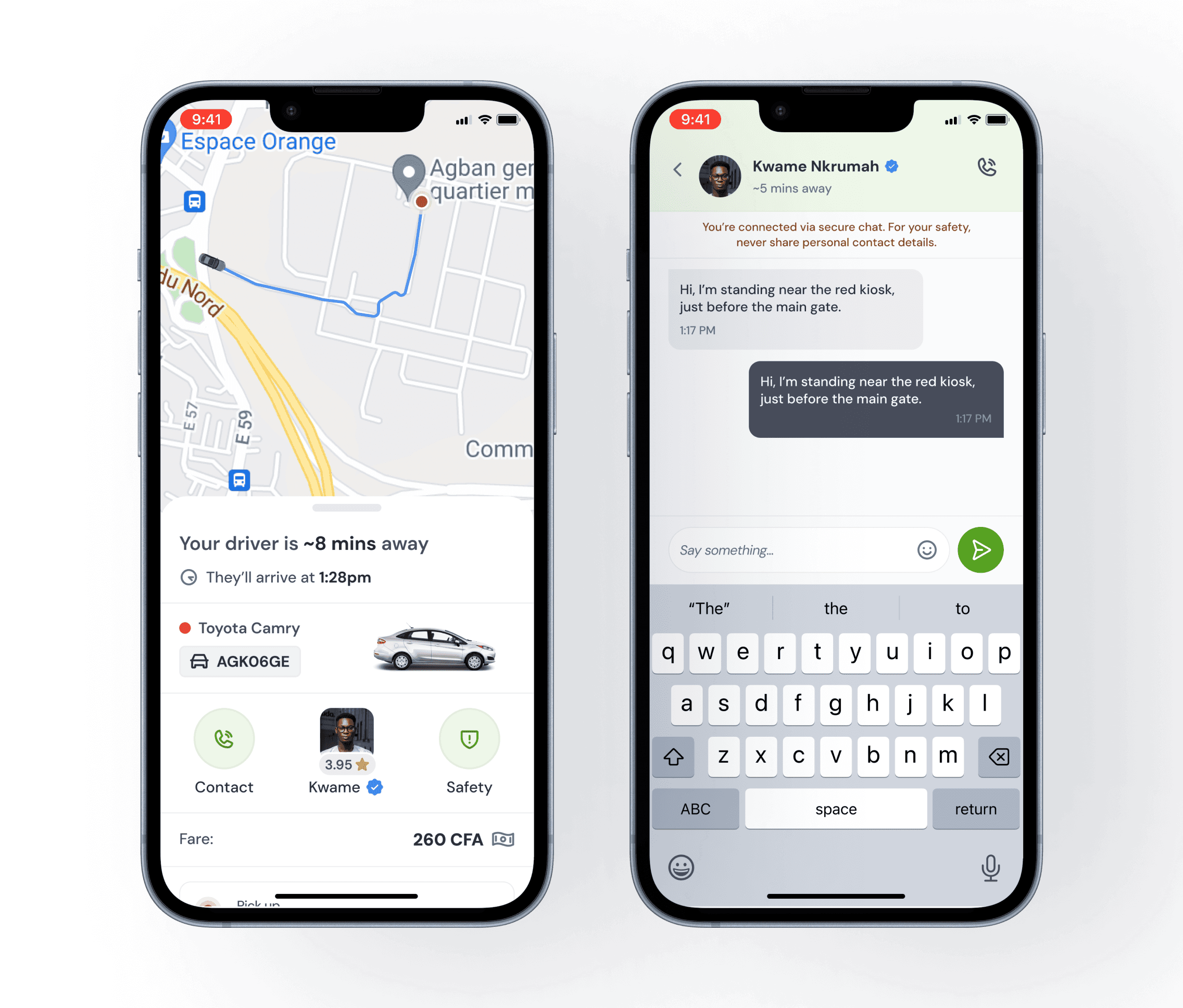
(Passenger POV: Ride in progress, featuring the chat interface)
(Passenger POV: Ride in progress, featuring the chat interface)
(Passenger POV: Ride in progress, featuring the chat interface)
The Goal 🎯
The Goal 🎯
The Goal 🎯
The primary goal of Wabeyi is to create a sustainable, community-driven mobility ecosystem that empowers drivers to earn supplemental income without disrupting their routines, while offering passengers affordable, safe, and predictable rides. Specifically, we aimed to:
The primary goal of Wabeyi is to create a sustainable, community-driven mobility ecosystem that empowers drivers to earn supplemental income without disrupting their routines, while offering passengers affordable, safe, and predictable rides. Specifically, we aimed to:
The primary goal of Wabeyi is to create a sustainable, community-driven mobility ecosystem that empowers drivers to earn supplemental income without disrupting their routines, while offering passengers affordable, safe, and predictable rides. Specifically, we aimed to:
Achieve high user adoption in key urban areas like Abidjan by targeting 50,000 active users within the first year post-launch.
Reduce transportation costs for users by 20-30% through efficient route matching and negotiable fares.
Promote environmental sustainability by encouraging carpooling, potentially cutting down on single-occupancy vehicles and emissions.
Build a profitable model with a 50/50 revenue split between the platform and drivers, while integrating partnerships for incentives to boost retention.
Ensure inclusivity by supporting low-bandwidth devices, mobile money integrations, and features like recurring trips for daily commuters.
Achieve high user adoption in key urban areas like Abidjan by targeting 50,000 active users within the first year post-launch.
Reduce transportation costs for users by 20-30% through efficient route matching and negotiable fares.
Promote environmental sustainability by encouraging carpooling, potentially cutting down on single-occupancy vehicles and emissions.
Build a profitable model with a 50/50 revenue split between the platform and drivers, while integrating partnerships for incentives to boost retention.
Ensure inclusivity by supporting low-bandwidth devices, mobile money integrations, and features like recurring trips for daily commuters.
Achieve high user adoption in key urban areas like Abidjan by targeting 50,000 active users within the first year post-launch.
Reduce transportation costs for users by 20-30% through efficient route matching and negotiable fares.
Promote environmental sustainability by encouraging carpooling, potentially cutting down on single-occupancy vehicles and emissions.
Build a profitable model with a 50/50 revenue split between the platform and drivers, while integrating partnerships for incentives to boost retention.
Ensure inclusivity by supporting low-bandwidth devices, mobile money integrations, and features like recurring trips for daily commuters.
As designers, our objective was to deliver a minimum viable product (MVP) that prioritizes user safety, ease of use, and monetization potential, setting the stage for scalable growth across West Africa.
As designers, our objective was to deliver a minimum viable product (MVP) that prioritizes user safety, ease of use, and monetization potential, setting the stage for scalable growth across West Africa.
As designers, our objective was to deliver a minimum viable product (MVP) that prioritizes user safety, ease of use, and monetization potential, setting the stage for scalable growth across West Africa.
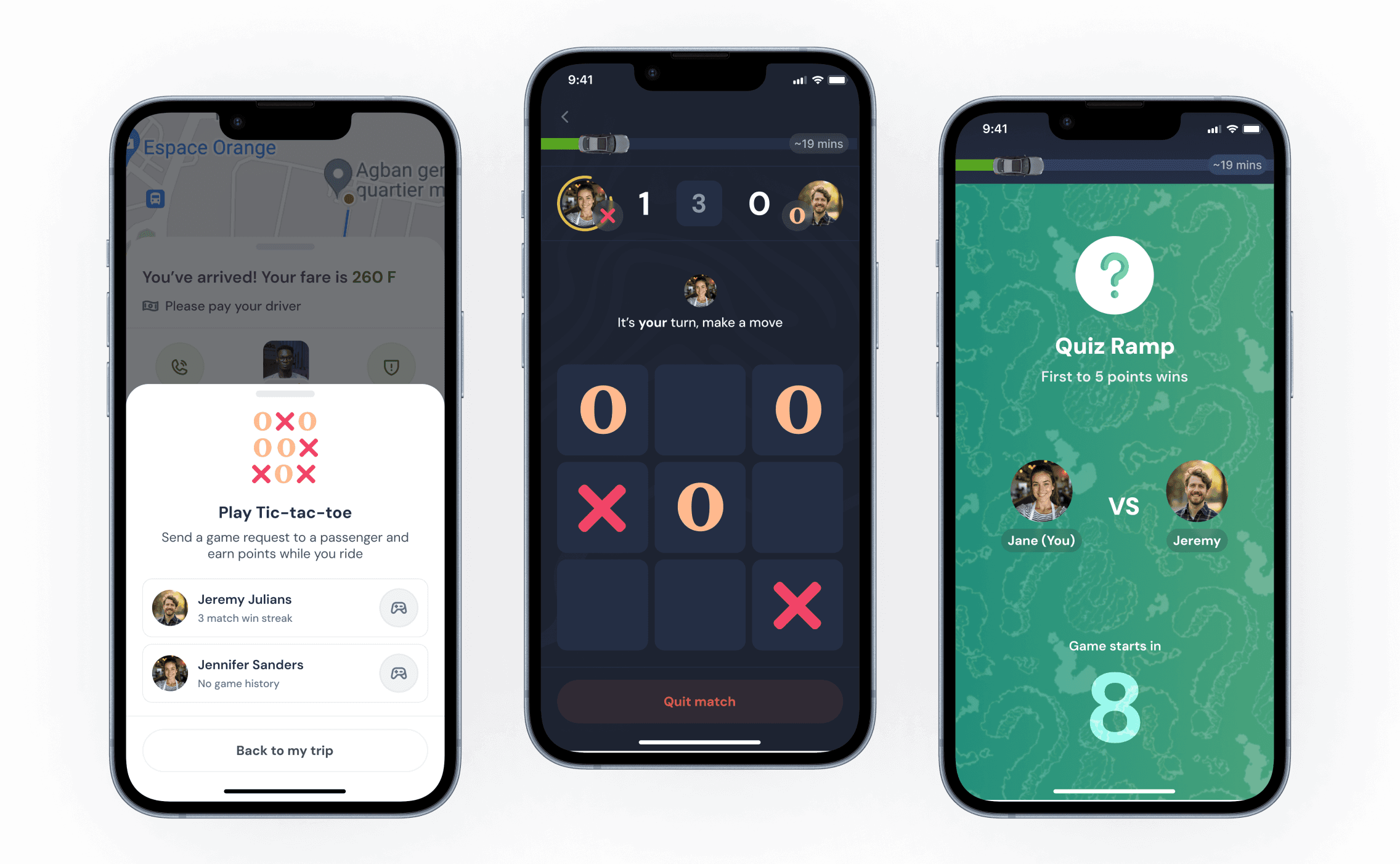
(To keep passengers engaged on shared rides, Wabeyi offers simple in-ride games with rewards.)
(To keep passengers engaged on shared rides, Wabeyi offers simple in-ride games with rewards.)
The Solution 💡
The Solution 💡
The Solution 💡
Wabeyi addresses these challenges through a robust set of features and user-centric design elements, developed iteratively with user feedback from prototypes
Wabeyi addresses these challenges through a robust set of features and user-centric design elements, developed iteratively with user feedback from prototypes
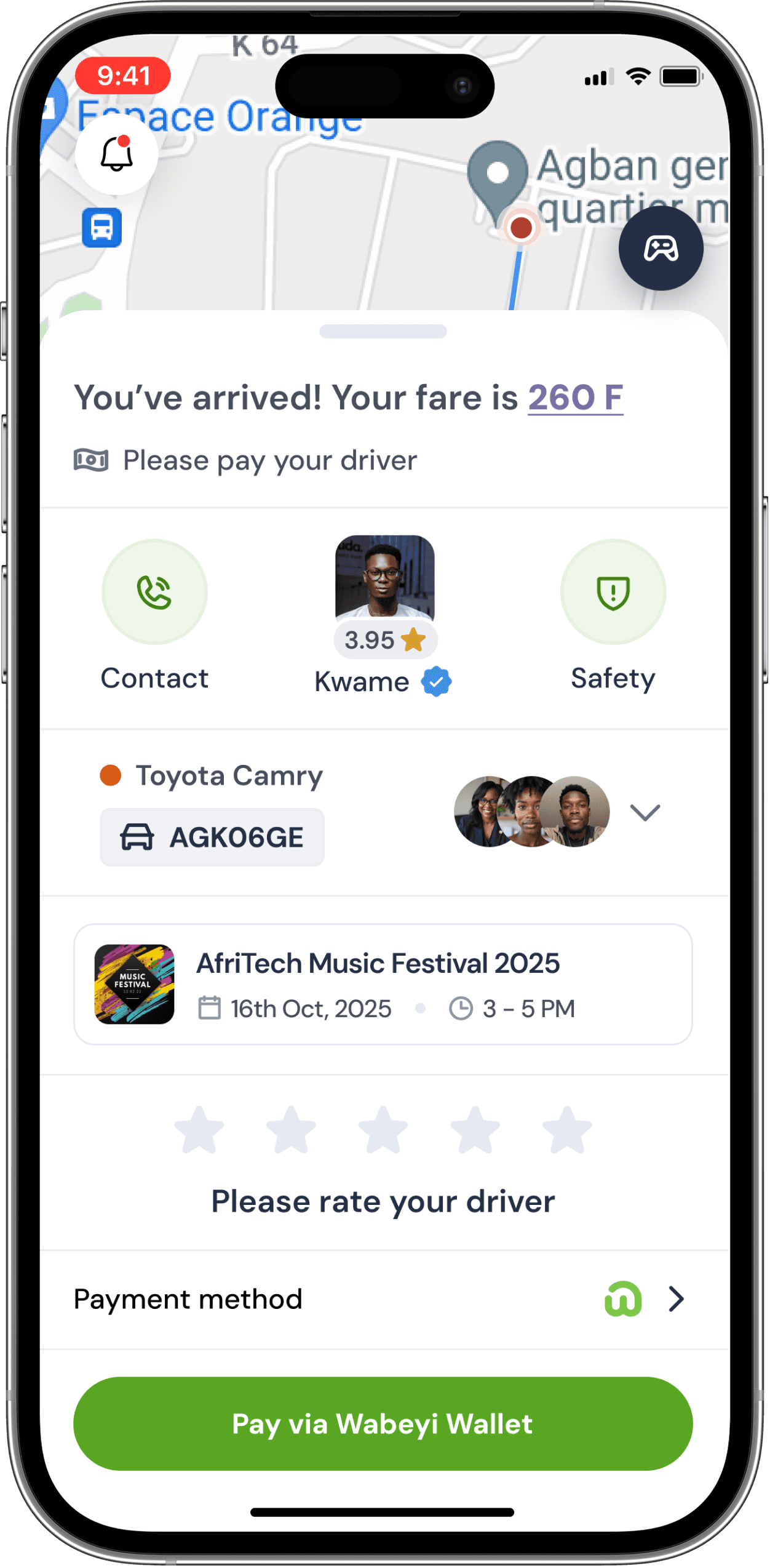
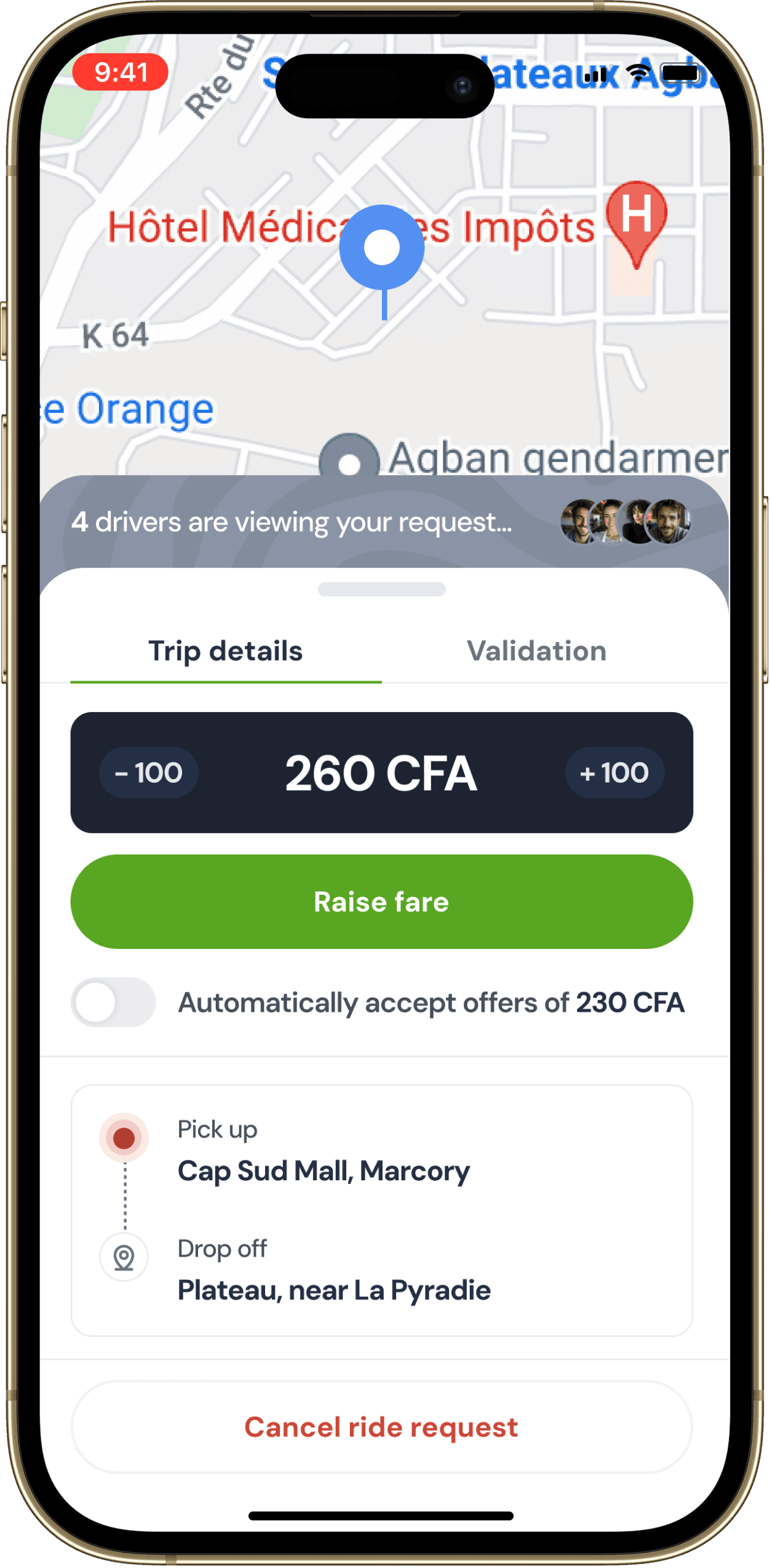
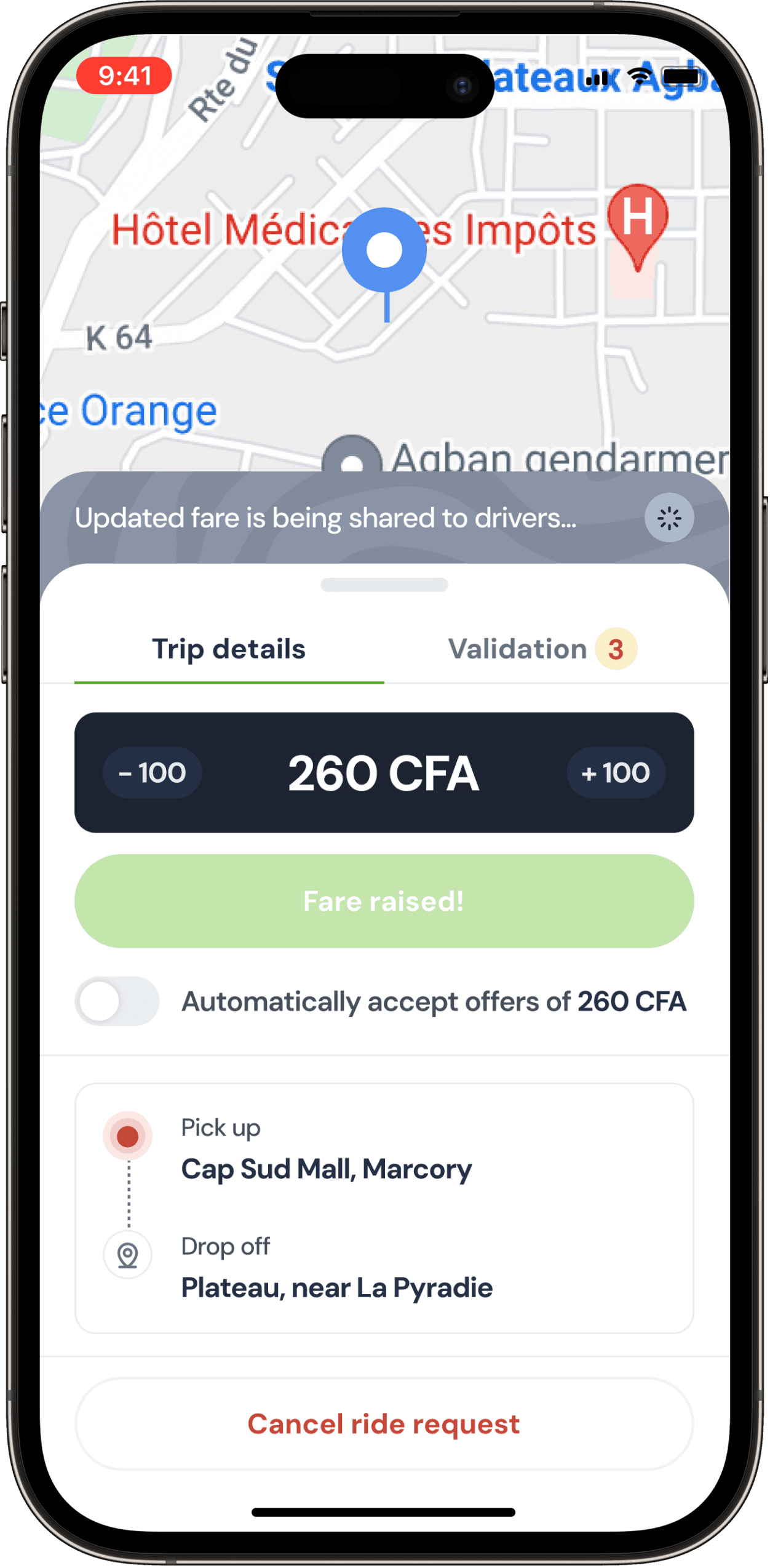
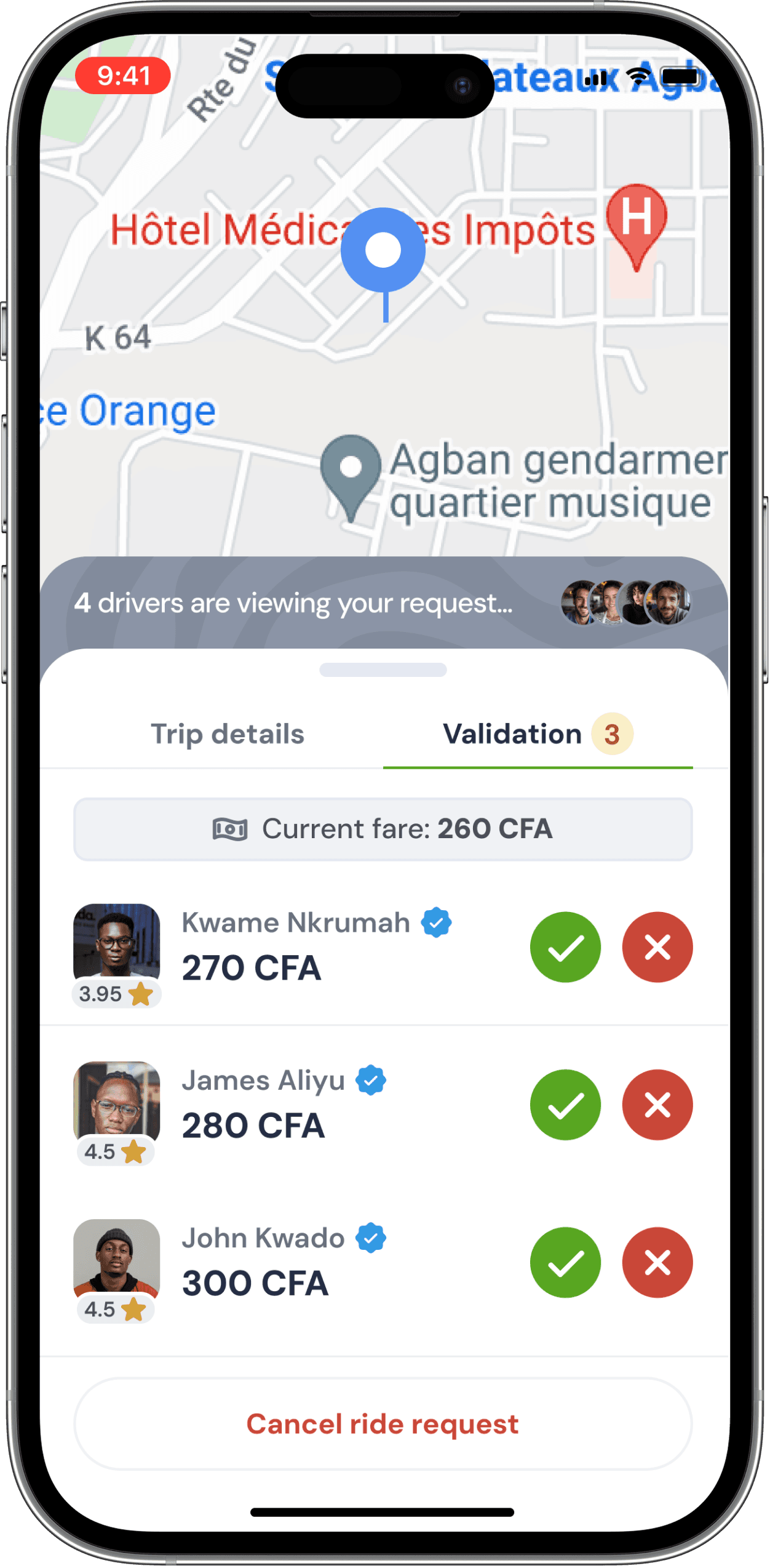
Core Feature 1, Ride-Hailing: This allows drivers to pick up passengers exclusively along their predefined routes, ensuring minimal deviations. Passengers start on the home screen by entering pickup location, destination, and passenger count, with fares auto-updating in real-time. They then search for matching drivers. Drivers input their route and search for passengers, viewing fare offers and sending counter-offers before acceptance. This negotiation empowers drivers and creates fair pricing, with color-coded apps (green for passengers, blue for drivers) enhancing intuitive navigation.
Core Feature 2, Carpooling: Drivers create custom trips by specifying pickup/drop-off locations, passenger capacity (up to 4), departure details, and optional recurrence (daily, weekdays, weekly, or monthly). The system suggests a base fare, which drivers can adjust. Passengers search by route, select dates for recurring trips, book seats, and negotiate fares via offers. Once accepted, trips are reserved. To ensure commitment, drivers must hold at least 20% of the trip fare in their Wabeyi wallet upfront.
Core Feature 3, Events: Mirroring carpooling but tailored for group outings, Wabeyi curates event-based trips (e.g., festivals or conferences). Drivers indicate interest in attending and offer rides, while passengers book seats. A key addition is the return trip option, which doubles fares for round-trip convenience. The rest follows carpooling workflows, fostering social connections.
Core Feature 1, Ride-Hailing: This allows drivers to pick up passengers exclusively along their predefined routes, ensuring minimal deviations. Passengers start on the home screen by entering pickup location, destination, and passenger count, with fares auto-updating in real-time. They then search for matching drivers. Drivers input their route and search for passengers, viewing fare offers and sending counter-offers before acceptance. This negotiation empowers drivers and creates fair pricing, with color-coded apps (green for passengers, blue for drivers) enhancing intuitive navigation.
Core Feature 2, Carpooling: Drivers create custom trips by specifying pickup/drop-off locations, passenger capacity (up to 4), departure details, and optional recurrence (daily, weekdays, weekly, or monthly). The system suggests a base fare, which drivers can adjust. Passengers search by route, select dates for recurring trips, book seats, and negotiate fares via offers. Once accepted, trips are reserved. To ensure commitment, drivers must hold at least 20% of the trip fare in their Wabeyi wallet upfront.
Core Feature 3, Events: Mirroring carpooling but tailored for group outings, Wabeyi curates event-based trips (e.g., festivals or conferences). Drivers indicate interest in attending and offer rides, while passengers book seats. A key addition is the return trip option, which doubles fares for round-trip convenience. The rest follows carpooling workflows, fostering social connections.
App Sections and Supporting Features
App Sections and Supporting Features
Passenger App,
Home for quick searches; Trips for managing bookings; Wallet for topping up via mobile money, withdrawals, and history; Profile for personal edits, points from in-ride games, reviews, and safety.
Home for quick searches; Trips for managing bookings; Wallet for topping up via mobile money, withdrawals, and history; Profile for personal edits, points from in-ride games, reviews, and safety.
Driver App,
Home for trip creation and ride-hailing; Wallet (similar, with pre-loading for trips); Analytics for monthly stats and bonus progress; Profile mirroring passenger side.
Home for trip creation and ride-hailing; Wallet (similar, with pre-loading for trips); Analytics for monthly stats and bonus progress; Profile mirroring passenger side.
Security and Incentives,
Three-tier KYC for drivers limits activities based on verification level. Partnerships with brands like MTN, Burger King, and Total Energies reward milestones with data, meals, or fuel. Passengers earn points by playing games during rides, redeemable for perks.
Three-tier KYC for drivers limits activities based on verification level. Partnerships with brands like MTN, Burger King, and Total Energies reward milestones with data, meals, or fuel. Passengers earn points by playing games during rides, redeemable for perks.
Business Model,
Wabeyi takes 50% of each fare, leaving 50% for drivers, ensuring alignment and sustainability.
Wabeyi takes 50% of each fare, leaving 50% for drivers, ensuring alignment and sustainability.
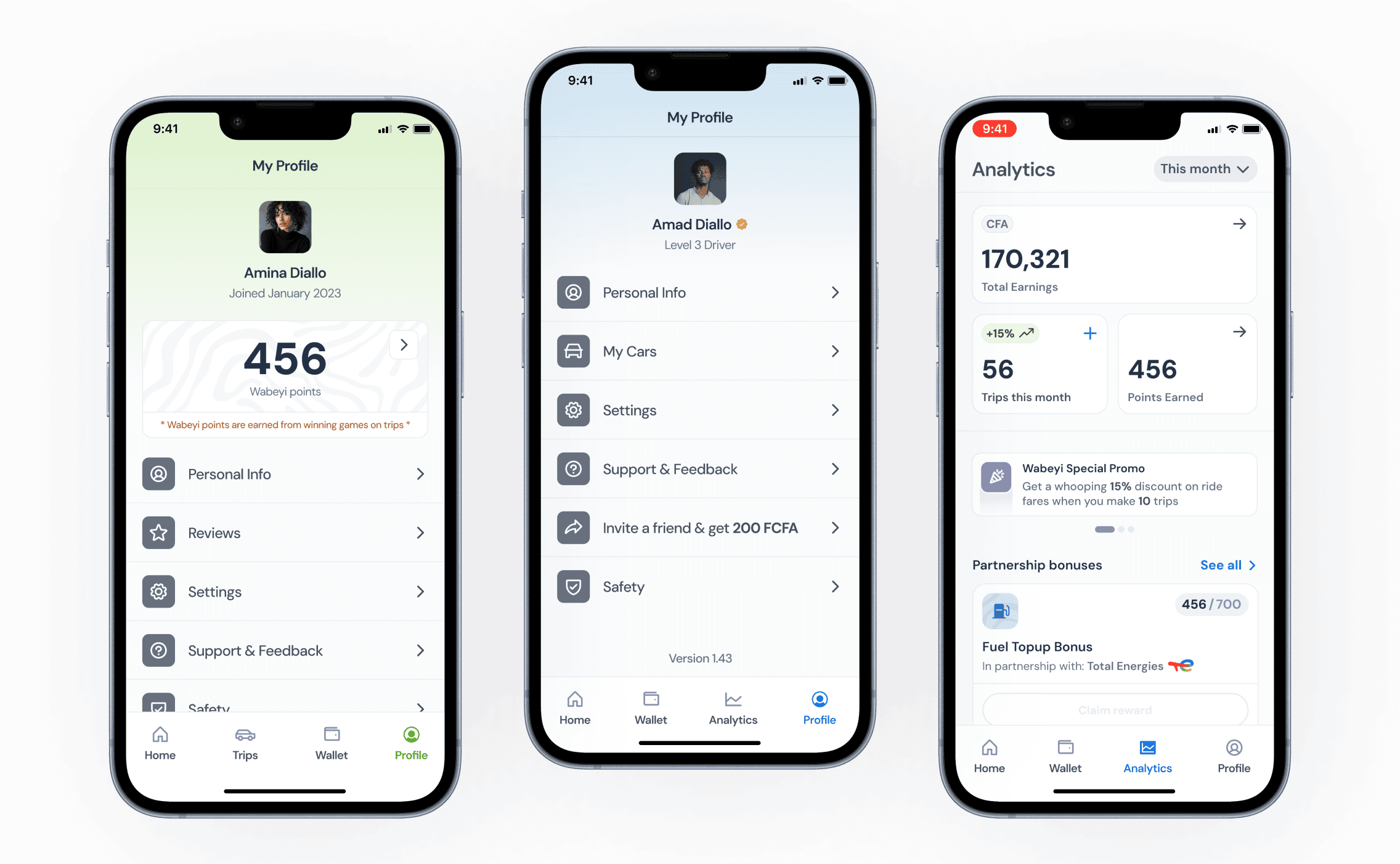
(Passenger profile vs Driver profile, as well as the current look of Driver's Analytics)
(Passenger profile vs Driver profile, as well as the current look of Driver's Analytics)
(Passenger profile vs Driver profile, as well as the current look of Driver's Analytics)
The Results 🥳
The Results 🥳
The Results 🥳
As Wabeyi is currently in the development phase, with the MVP nearing completion, results are based on prototype testing and user simulations conducted during design iterations.
Early beta tests with 200 simulated users in Abidjan showed promising engagement: 85% of drivers reported satisfaction with route-based matching, reducing perceived effort by 40% compared to traditional apps. Passengers appreciated fare negotiations, leading to a 25% average cost savings in mock scenarios.
Projected post-launch metrics include a 30% month-over-month user growth, driven by word-of-mouth in commuter communities and partnerships. Incentive programs are expected to boost driver retention to 70%, with milestone rewards distributing over 10,000 perks in the first six months.
Environmentally, simulations estimate a reduction of 15% in daily vehicle trips per active user through carpooling. Financially, the 50/50 split positions Wabeyi for break-even within 18 months, assuming 20,000 rides monthly. Challenges like regulatory approvals are being addressed, paving the way for a Q3 2026 launch.
As Wabeyi is currently in the development phase, with the MVP nearing completion, results are based on prototype testing and user simulations conducted during design iterations.
Early beta tests with 200 simulated users in Abidjan showed promising engagement: 85% of drivers reported satisfaction with route-based matching, reducing perceived effort by 40% compared to traditional apps. Passengers appreciated fare negotiations, leading to a 25% average cost savings in mock scenarios.
Projected post-launch metrics include a 30% month-over-month user growth, driven by word-of-mouth in commuter communities and partnerships. Incentive programs are expected to boost driver retention to 70%, with milestone rewards distributing over 10,000 perks in the first six months.
Environmentally, simulations estimate a reduction of 15% in daily vehicle trips per active user through carpooling. Financially, the 50/50 split positions Wabeyi for break-even within 18 months, assuming 20,000 rides monthly. Challenges like regulatory approvals are being addressed, paving the way for a Q3 2026 launch.
As Wabeyi is currently in the development phase, with the MVP nearing completion, results are based on prototype testing and user simulations conducted during design iterations.
Early beta tests with 200 simulated users in Abidjan showed promising engagement: 85% of drivers reported satisfaction with route-based matching, reducing perceived effort by 40% compared to traditional apps. Passengers appreciated fare negotiations, leading to a 25% average cost savings in mock scenarios.
Projected post-launch metrics include a 30% month-over-month user growth, driven by word-of-mouth in commuter communities and partnerships. Incentive programs are expected to boost driver retention to 70%, with milestone rewards distributing over 10,000 perks in the first six months.
Environmentally, simulations estimate a reduction of 15% in daily vehicle trips per active user through carpooling. Financially, the 50/50 split positions Wabeyi for break-even within 18 months, assuming 20,000 rides monthly. Challenges like regulatory approvals are being addressed, paving the way for a Q3 2026 launch.
Key Takeaways 👌🏾
Key Takeaways 👌🏾
Key Takeaways 👌🏾
🇨🇮
User-Centric Localization Matters;
User-Centric Localization Matters;
Tailoring features to Côte d'Ivoire's context—such as mobile money integration and recurrence for daily commutes—proved essential for relevance and adoption in emerging markets.
Tailoring features to Côte d'Ivoire's context—such as mobile money integration and recurrence for daily commutes—proved essential for relevance and adoption in emerging markets.
⚖️
Balancing Dual User Needs;
Balancing Dual User Needs;
Designing for both drivers and passengers required careful negotiation mechanics to ensure fairness, highlighting the value of collaborative design with senior expertise.
Designing for both drivers and passengers required careful negotiation mechanics to ensure fairness, highlighting the value of collaborative design with senior expertise.
🎁
Incentives Drive Engagement;
Incentives Drive Engagement;
Milestone rewards and in-ride games emerged as powerful tools for retention, underscoring the need to blend utility with gamification.
Milestone rewards and in-ride games emerged as powerful tools for retention, underscoring the need to blend utility with gamification.
🔐
Security as a Foundation;
Security as a Foundation;
Implementing tiered KYC not only mitigates risks but builds trust, a critical factor in mobility apps.
Implementing tiered KYC not only mitigates risks but builds trust, a critical factor in mobility apps.
🔄
Iterate on Projections;
Iterate on Projections;
With the app pre-launch, focusing on prototype data informed scalable decisions, reminding us that real-world testing will refine assumptions.
🚥
Sustainability Focus;
Sustainability Focus;
The route-based model promotes efficiency and eco-friendliness, offering a blueprint for similar apps in traffic-heavy regions.
The route-based model promotes efficiency and eco-friendliness, offering a blueprint for similar apps in traffic-heavy regions.
- Built with:
Figma + Framer + Fufu
© 2020-2026 Chukwunomso
- Last update:
Fri Jun 19, 2026
- Built with:
Figma + Framer + Fufu
© 2020-2026 Chukwunomso
- Last update:
Fri Jun 19, 2026
© 2020-2026 Chukwunomso
- Built with:
Figma + Framer + Fufu
- Last update:
Fri Jun 19, 2026
© 2020-2026 Chukwunomso
- Built with:
Figma + Framer + Fufu
- Last update:
Fri Jun 19, 2026